
What to See and Do at La Mercè Festival in Barcelona
La Mercè is often called the ‘festival of all festivals’ in Barcelona, and it’s easy to see why. This huge city-wide celebration brings together traditional Catalan culture, live music, street theatre, dance, fireworks, and contemporary performances, turning streets, squares, parks, and beaches across Barcelona into one enormous festival.
In 2026, La Mercè takes place from 23 to 27 September, with the main feast day falling on Thursday, 24 September, which is a local public holiday in Barcelona.
The origins of La Mercè are closely linked to Barcelona’s devotion to La Mare de Déu de la Mercè (Our Lady of Mercy), the city’s patron saint. According to tradition, in 1687, Barcelona was struck by a devastating plague of locusts. The people turned to Our Lady of Mercy for protection, and when the plague came to an end, she was declared one of Barcelona’s patron saints. The city has honoured her every September ever since, with La Mercè becoming one of Barcelona’s biggest and most spectacular celebrations.
Mercè Festival
History of La Mercè in Barcelona
The Origins of La Mercè
La Mercè has been celebrated in Barcelona since 1868, with the official holiday falling on 24 September, although the festivities now extend over several days. The festival honours the city’s patron saint, La Mare de Déu de la Mercè (Our Lady of Mercy), who has long been associated with Barcelona and its people. According to one legend, in 1218, the Virgin appeared to King Jaume I, Saint Peter Nolasco and Saint Raymond of Peñafort, asking them to create a religious order dedicated to rescuing Christian captives. This became the Order of Mercy, strengthening the Virgin’s connection with Barcelona.

The Patron Saint of Barcelona
Another important story dates to 1687, when Barcelona was devastated by a plague of locusts. According to tradition, the people turned to Our Lady of Mercy for help, and when the plague ended, she was declared one of the city’s patron saints, alongside Saint Eulàlia. In 1868, Pope Pius IX officially named her the principal patroness of Barcelona, and in 1871, her feast day on 24 September became a public holiday. These religious origins remain an important part of La Mercè, but the festival has since developed far beyond its original celebrations.
From Religious Festival to City-Wide Celebration
At first, La Mercè was celebrated in a mainly religious and conservative way. However, in 1902, the festival took on a new character with the introduction of parades, castells (human towers), sardana dancing, gegants and other Catalan traditions. From this point onwards, La Mercè continued to grow and evolve, gradually incorporating concerts, street theatre, circus, dance, contemporary arts and international cultural events. Today, the festival combines Barcelona’s historic traditions with a diverse modern programme, turning streets, squares, parks and public spaces across the city into stages for celebration. This evolution has made La Mercè one of Barcelona’s most important annual festivals and a unique showcase of the city’s culture, creativity and community.
What’s New at La Mercè 2026?
Cinta Vidal Agulló: Artist Behind the 2026 Poster
Cinta Vidal Agulló, a Barcelona visual artist, is the creator of the La Mercè 2026 poster. Her artwork, “Barcelona unfolded”, reimagines the city through fragmented spaces, unusual perspectives and multiple points of view, bringing together iconic landmarks and all eleven districts represented in the poster. Inspired by the different festivals and traditions of La Mercè, the design invites viewers to discover hidden details and symbols, reflecting Barcelona’s diversity and richness.
Antoni Falgueras: Opening Speaker
Antoni Falgueras, a renowned Barcelona winemaker and fourth-generation owner of Celler de Gelida, will open La Mercè 2026. Born and raised in Sants, he has preserved his family’s 130-year wine tradition while modernising the historic shop. With over 5,000 wine and liqueur references, especially Catalan wines, Falgueras has helped promote Barcelona’s wine culture and revived the tradition of young wine in 1978.
Shanghai as guest city
La Mercè 2026 will celebrate Shanghai as the Guest City, marking the 25th anniversary of the sister-city partnership between Barcelona and Shanghai. During the festivities, Barcelona will welcome more than one hundred artists from Shanghai and the Chinese community, offering visitors an opportunity to discover Chinese culture through street arts, music, dance, tradition and contemporary performances.
The programme will showcase the contrast between Shanghai’s modern, cosmopolitan identity and its rich cultural traditions. Highlights include the Traditional Chinese Rolling Lantern Performance, the Shanghai Chinese Orchestra, the Shanghai Conservatory of Music, jazz performances, circus and acrobatics by the Shanghai Acrobatic Troupe, as well as dance performances by several Chinese and Barcelona-based artists. Chinese dragons, traditional figures, fireworks and a spectacular drone show will also add a strong visual dimension to the celebrations.
The Shanghai-themed programme is the result of collaboration between institutions from both cities and cultural organisations, including Shanghai City Council, the Chinese Consulate in Barcelona, CSIAF and other Shanghai cultural offices, together with Casa Àsia, the Institut Confuci of Barcelona and several Chinese cultural associations in Barcelona. Through this collaboration, La Mercè 2026 will create a vibrant cultural exchange between Barcelona and Shanghai, celebrating their long-standing friendship and shared creativity.
Location Piromusical
One of the biggest changes this year is the location of the Piromusical. The Piromusical is one of La Mercè’s main shows, combining fireworks, music and lights into a spectacular coordinated performance.Due to transformation works at the Fira Montjuïc site, the spectacular fireworks and music show will take place at Barceloneta beach instead.
Celebrations Across Barcelona’s Districts
One of the most exciting things about La Mercè 2026 is the way the festival brings Barcelona together. Rather than concentrating everything in the city centre, the celebrations spread across the city’s districts, with music, street arts, circus, dance and family activities taking place in neighbourhoods throughout Barcelona.
Some of the festival’s best-known locations include Plaça de Sant Jaume, Plaça de Catalunya, Avinguda de la Catedral and Parc de la Ciutadella, while Parc de l’Estació del Nord, Parc del Fòrum and other parks provide spaces for outdoor performances and Mercè Arts de Carrer. Music lovers can enjoy concerts at venues such as Moll de la Fusta, Rambla del Raval, Antiga Fàbrica Estrella Damm and Teatre Grec, as well as various locations along the waterfront.
In 2026, the coast will be particularly important, with events around Port Olímpic and Barceloneta, including the new location for the Piromusical. This city-wide approach makes La Mercè more than a festival in the centre of Barcelona; it becomes a celebration for the whole city, giving both residents and visitors the opportunity to explore different neighbourhoods while discovering performances, concerts and cultural traditions beyond the usual tourist routes.
Festival Highlights
Like many Catalan festivities, gegants i capgrossos (giants and big-headed figures), castellers (human towers), sardanas, and other traditional performances are at the heart of La Mercè. These colourful traditions bring Barcelona’s neighbourhoods together and showcase the city’s strong sense of community.
Another unforgettable tradition is the correfoc, or fire run, where costumed performers dressed as devils and mythical beasts dance through the streets surrounded by fireworks and sparks.
The festival also features a huge programme of street arts, cultural activities, fireworks, open days at museums and institutions, and free concerts throughout the city. In 2026, the programme includes more than 100 concerts across 16 stages, with artists from around 30 countries.
Gegants and Capgrossos
Gegants and capgrossos (giants and big heads) are a huge part of the La Mercè festival and Catalan culture as a whole.
Rooted in Corpus Christi celebrations, the Giants Parade can be found at festivals throughout Catalonia. These figures are crafted from paper-mâché and represent important historical figures and symbols in Catalan culture. Rising above a lively crowd, the giants sway and dance to the drums and percussion of the parade music.
The parade is one of the highlights of La Mercè and is worth attending for people of all ages.

Correfoc: Devils and Dragons
The Correfoc, also known as the ‘fire run’, is one of the most iconic and highly anticipated traditions of La Mercè. The spectacular parade features diables (devils) and dracs (dragons), who dance and run through the streets surrounded by sparks, fireworks and the sound of drums.
The dracs are particularly striking, with their elaborate designs, colourful scales, horns and mythical appearance. Dragons have a long history in Catalan popular culture and are a familiar symbol at traditional festivals throughout Catalonia. During the Correfoc, they become part of a dramatic display of fire and movement, bringing ancient folklore to life in the streets of Barcelona. The combination of the dragons, devils, fireworks and crowds creates an exhilarating atmosphere that makes the Correfoc one of the most memorable experiences of La Mercè.
Since the Correfoc can be dangerous, it is not recommended for young children. However, a Junior Correfoc takes place shortly before the main event, offering families a safer way to experience this tradition. If you plan to attend the main Correfoc, take appropriate precautions: wear protective clothing that covers your skin, avoid open-toed shoes and keep a safe distance from the performers. Most importantly, follow the organisers’ safety instructions and be prepared for sparks and fireworks to come very close to the spectators.

Castellers
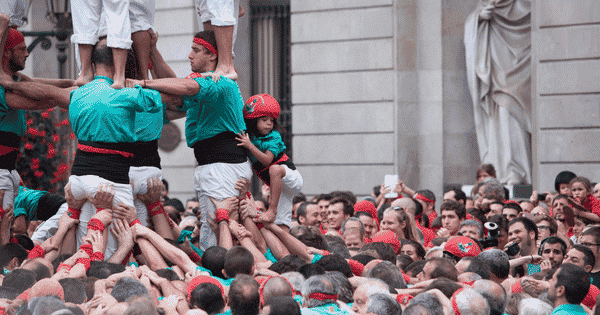
Another age-old Catalan tradition that makes up a huge part of La Mercè is the Castellers, or human towers. This tradition came about at the end of the 18th century and has been popular in Catalonia ever since.
People get together and climb on top of one another, creating a human tower that can reach almost eight stories high. To finish off the tower, a child climbs to the top.
During La Mercè, casteller performances are often held in the Gothic Quarter and other central locations, making them a spectacular sight for visitors and locals alike.

Mercè Arts de Carrer (MAC)
Mercè Arts de Carrer (MAC) is one of the main programmes of La Mercè, bringing theatre, circus, dance and live performance into Barcelona’s streets, parks and public spaces. Instead of taking place in traditional theatres, MAC turns the city itself into a stage, creating a lively atmosphere throughout the festival.
Street Theatre
Street theatre is at the heart of MAC, with performers bringing stories, comedy and drama directly to public spaces. These performances are designed to be enjoyed by audiences of all ages and often make use of the surrounding streets and squares as part of the show.
Circus
The programme also features circus performances, including acrobatics, physical theatre, juggling and other spectacular acts. These outdoor shows combine entertainment and skill, making them a popular part of the festival.
Dance
Dance is another important part, with performances ranging from contemporary dance to more experimental styles. Performers use public spaces in creative ways, allowing audiences to experience dance outside a traditional theatre setting.
Family Performances
MAC also includes a wide range of performances for children and families. These shows make La Mercè accessible to younger visitors, with playful theatre, circus, dance and interactive performances taking place across the city.
With its mix of street theatre, circus, dance and family shows, Mercè Arts de Carrer brings art directly into the streets of Barcelona, making it one of the most vibrant and accessible parts of La Mercè.
Music Everywhere
BAM Festival
A major part of La Mercè is the BAM Festival (Barcelona Acció Musical), which brings free live music to stages around the city. BAM focuses on contemporary music and presents artists from Barcelona, Catalonia, Spain and around the world.
The programme covers a wide range of styles, including indie, pop, rock, electronic, jazz, folk and experimental music.
With concerts taking place in different outdoor venues across Barcelona, BAM gives both established and emerging artists a chance to perform to large audiences during the festival.
Música Mercè
Música Mercè is the other main music programme of La Mercè. While BAM focuses particularly on contemporary and emerging music, Música Mercè presents a broader selection of live performances by artists from different musical backgrounds.
Together, BAM and Música Mercè make music one of the central parts of La Mercè, with concerts taking place across the city throughout the festival. Many of these performances are free, allowing visitors to enjoy live music while experiencing the atmosphere of Barcelona during La Mercè.
In 2026, BAM and the wider Mercè music programme will feature more than 100 free concerts across Barcelona, covering everything from indie and pop to electronic, rock, jazz, folk, and experimental music. Artists performing during the festival include names such as Nacho Vegas, Els Amics de les Arts, Els Catarres, Svetlana, Maria Jaume, Sexenni, Buhos and La Pegatina.
Free Museums and Cultural Venues
La Mercè is also a great opportunity to explore Barcelona’s museums and cultural institutions. During the festival, a number of museums and cultural venues take part in the celebrations by offering free admission, special activities, exhibitions, workshops and other events.
This makes La Mercè a good time to discover some of Barcelona’s cultural attractions that you might not normally have time to visit. From art and history to architecture, design and local heritage, the programme offers something for a wide range of interests.
Some venues also organise special activities, including guided visits, family workshops, performances and temporary exhibitions. These events add another dimension to the festival, allowing visitors to experience Barcelona’s culture beyond the outdoor concerts and traditional celebrations.
Free museum access is particularly popular during La Mercè, so it is worth checking the programme and individual museum websites in advance. Some activities may require prior registration, while others are available on a first-come, first-served basis.

Crowds at La Mercè Festival
With events taking place across Barcelona over several days, La Mercè can become extremely busy, particularly during the most popular concerts, parades, the Correfoc and the Piromusical. The busiest areas are usually the main central squares, major concert venues and waterfront locations, where large crowds gather to enjoy the biggest events. If you want a good view of a popular performance, it is worth arriving early and allowing extra time to move between locations.
Public transport and walking are often the easiest ways to get around, although some streets may be closed or particularly crowded during major events. Families and visitors who prefer a quieter experience can explore activities in the city’s neighbourhoods, where smaller performances and community events can offer a more relaxed atmosphere.
Cursa de la Mercè
The Cursa de la Mercè Bimbo Global Race returns on 20 September 2026 for its 48th edition. One of Barcelona’s most iconic mass-participation races, it brings thousands of runners together while celebrating sport, inclusion, and community.
- 5-7
- 20 September 2026
- City Centre
- More Info


Add a comment